 Skip to content

Themar Al Emarat Group runs the largest mushroom farm in the United Arab Emirates, producing between 7 and 7.5 tonnes of mushrooms daily. UMDIS Mushroom Agency had the pleasure of meeting Mohammed Abdelhay from Themar Al Emarat to learn how the farm operates, how it handles the region’s harsh climate, and what makes it one of the most efficient mushroom farms in the Middle East.
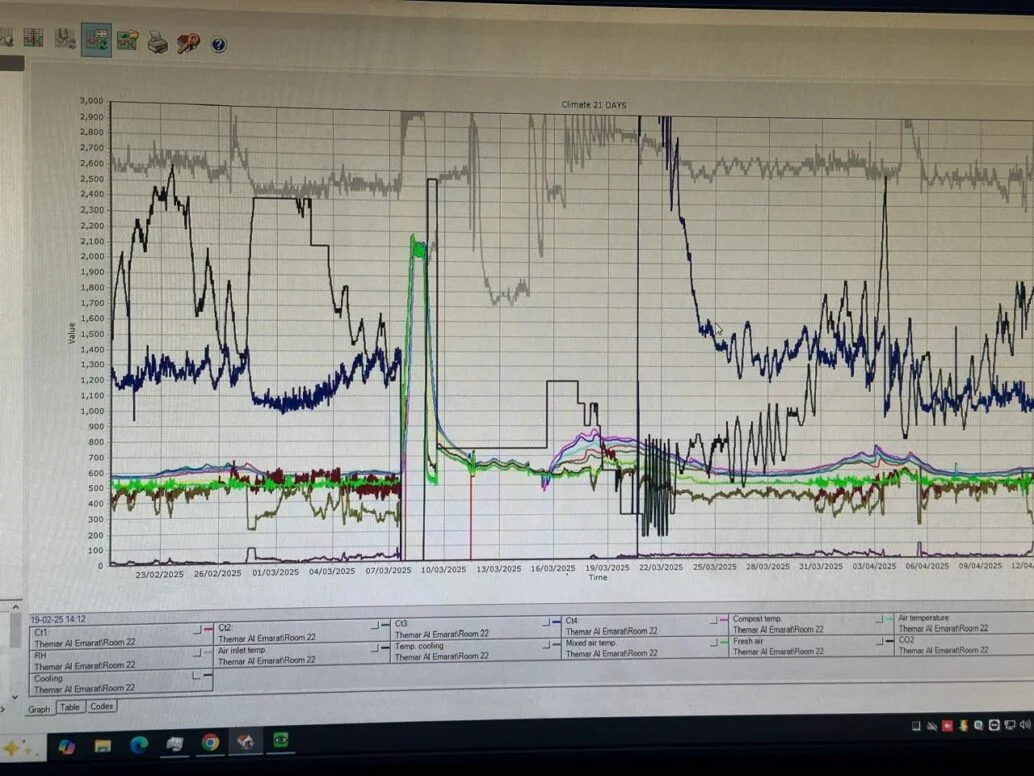
Located in Sharjah, a desert region of the UAE, Themar Al Emarat’s facility covers 9,600 square metres of growing space. It includes 12 climate-controlled growing rooms, arranged in two separate blocks. Each room is equipped with modern automation systems for irrigation, climate control, and monitoring, allowing the farm to maintain precise growing conditions year-round.
Despite operating in one of the world’s hottest climates, the farm reports better productivity in summer than in winter, thanks to its robust insulation and environmental controls. The infrastructure was designed and built by Christiaens Group, a Dutch company known for mushroom farming solutions, and has proven effective in maintaining stable conditions despite outdoor temperature extremes.
Themar Al Emarat specializes in white button mushrooms, which dominate consumer demand in the UAE. Production is continuous, with daily harvesting ensuring a steady supply to supermarkets, wholesalers, and restaurants across the country.
When asked about market entry, Abdelhay explained, “It took more than a year to build reliable distribution but now we supply roughly a third of all mushrooms sold in the UAE.” Their fully controlled supply chain, from production to delivery, gives them an edge in a market where freshness is critical.
Producing between 1,825 to 2,555 tons of mushrooms per year, the farm accounts for approximately 35% of the country’s total mushroom production. Other local farms contribute another 15%, but imports still fill the remaining 50% of demand. Prices range from €3.50 to €4 per kilogram, depending on competition and occasional oversupply from imports.
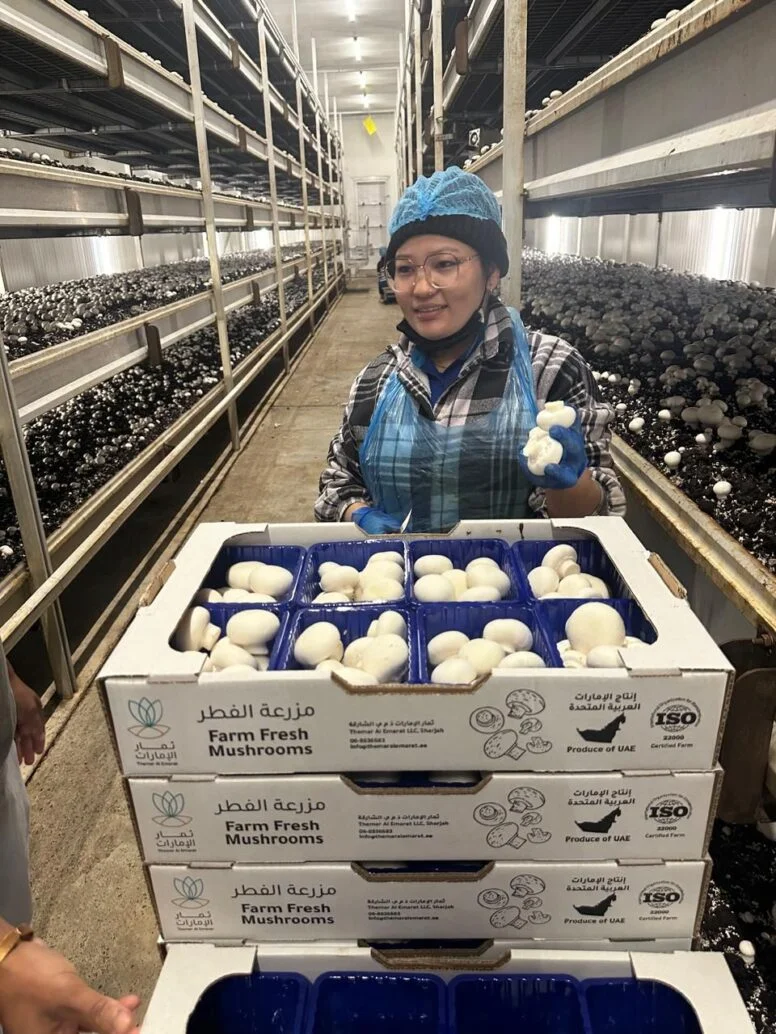
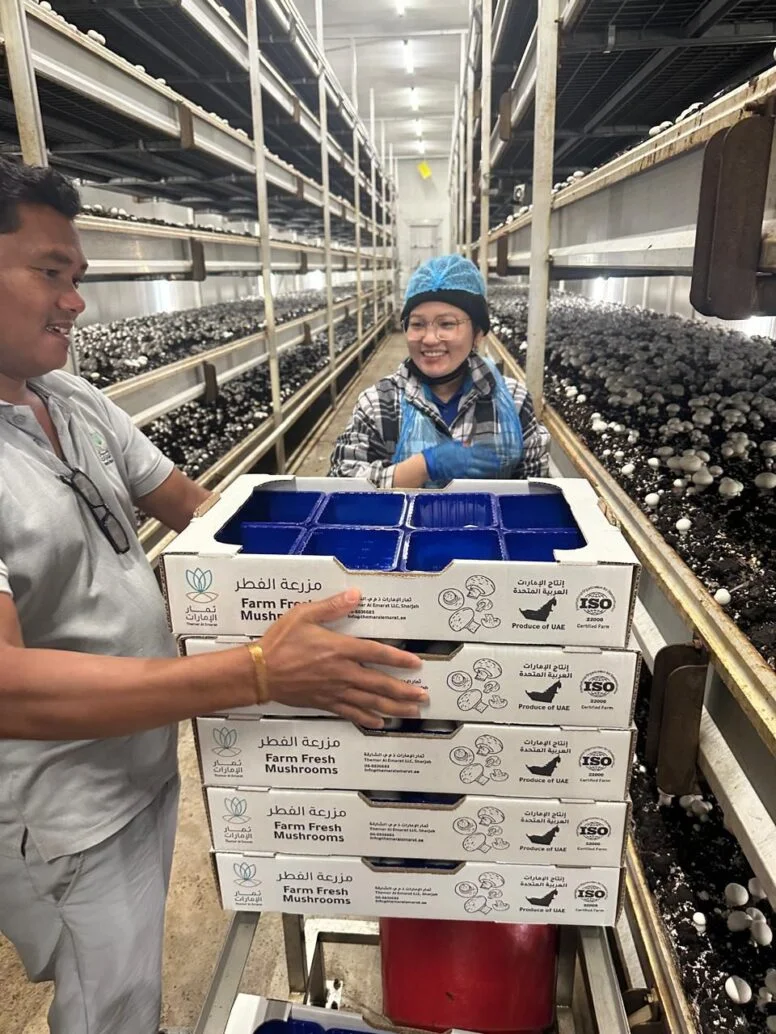
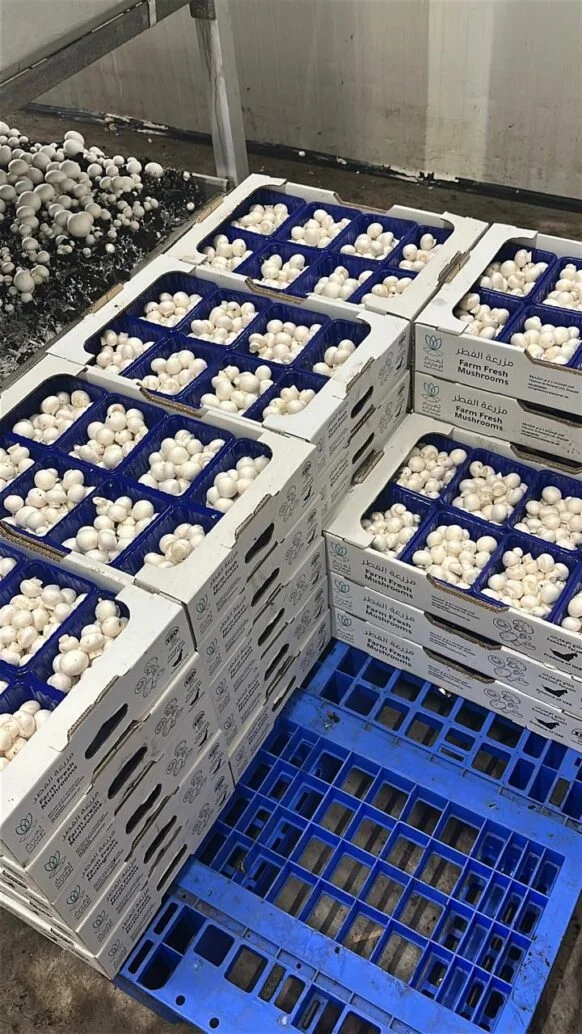
To operate efficiently, the farm imports both compost and casing soil from the Netherlands. This ensures consistent quality, though it also increases logistical complexity and cost. The farm is entirely off-grid, powered by a combination of solar energy and diesel generators. No electricity is sourced from the national grid.
Sustainability is a key priority for Themar Al Emarat’s. The company recycles its spent compost and casing soil, turning them into by-products for landscaping and agriculture. Even wooden pallets and plastic packaging materials are reused or sold, creating multiple revenue streams beyond mushroom sales.
Looking ahead, Themar Al Emarat’s is exploring the possibility of building a local compost yard to reduce dependence on imports. The aim is to secure a more resilient supply chain and increase self-sufficiency in the UAE’s growing agricultural sector.
Would you like to see this farm in person? We are holding a mushroom growing workshop right here at Themar Al Emarat from October 28 to 30, led by UMDIS consultant Iurie Boiciuc.
Thank you to Mohamed Abdelhay for sharing with us. Watch the video for a view into Themar Al Emarat farm, location for the UMDIS Mushroom Growing Course in October. Contact us on Facebook to register.


