
 Skip to content
€2.00
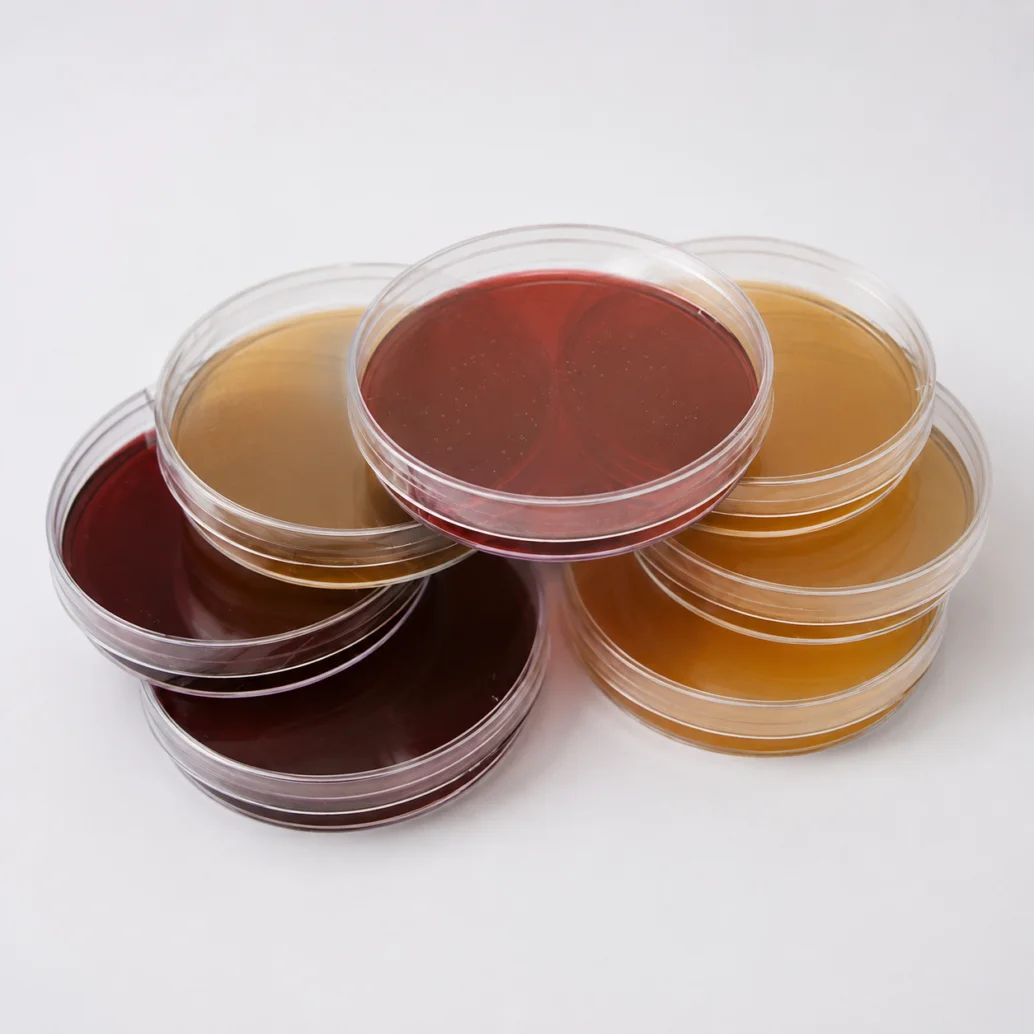
A petri dish is a laboratory dish that is widely used for growing bacteria and microorganisms on dense nutrient media.
It consists of two transparent flat cups (usually made of glass or plastic), one of which serves as a lid.
Pour 25-30 ml of culture medium, melted and cooled to 55 °C, into the cup, after which the medium solidifies on a horizontal surface. The colonies of bacteria and fungi can be observed by viewing the dish in the light.
Application in mushroom growing:
Petri dishes are used to analyze the air quality in mushroom growing chambers. To do this, open cups with the nutrient medium are placed in several places in the chamber for 5-10 minutes (before starting work, after washing and disinfecting the room).
After sampling, the cups are closed, preferably sealed or secured with an elastic band to prevent the ingress of foreign particles. The cups are then left at a temperature of 20-25 °C for the growth of microorganisms. The date and location of the sample collection should be indicated on each cup.
After 5-10 days, you can count the number of spores and evaluate the changes after the chamber treatment. Optionally, you can identify the grown fungi and bacteria using the pure culture method.
Important:
A qualified specialist is required to accurately identify the type of microorganism, as the appearance of colonies can vary even among members of the same genus. For detailed identification, isolation of pure cultures or molecular methods are used, especially for complex groups such as Trichoderma.
€2.00

Thanks for subscribing! We’ve got your email and will send you the freshest updates straight to your inbox.
Thanks for reaching out. We’ve received your request and will be in touch within 24 hours.